
EV Loss %
EV Loss % measures how much expected value (EV) you lost on a decision, expressed as a percentage of the final pot size for that street. It shows how severe a mistake was relative to the pot, helping you prioritize the most costly errors in your game.
This metric is crucial because not all mistakes are equal. A $10 error in a $20 pot is catastrophic. The same $10 error in a $500 pot is barely noticeable. EV Loss % normalizes mistakes so you can compare them fairly and focus on what really matters.
How it's calculated
EV Loss % is calculated by dividing the EV difference between your action and the GTO action by the final pot size on that street:
EV Loss % = (EV Loss ÷ Final Pot Size on Street) × 100
This normalization lets you compare mistakes from pots of different sizes. Here's why that matters:
- A $10 mistake in a $20 pot = 50% EV Loss - This is a serious blunder
- A $10 mistake in a $500 pot = 2% EV Loss - This is a minor error
The absolute dollar amount is the same, but the severity is completely different. EV Loss % captures that difference.
What it tells you
A high EV Loss % highlights large mistakes relative to the pot size. These often represent fundamental strategic errors such as:
- Folding when a call is clearly profitable
- Missing a strong value bet
- Over-bluffing in small pots
- Calling down with weak hands when the pot odds don't support it
These numbers help you focus on the decisions that most affect your win rate. If you're consistently making 20% EV Loss mistakes, you're leaving massive amounts of money on the table.
EV Loss % in the Replayer
In the GTO Replayer, EV Loss % appears beside every decision you make. This gives you direct feedback on how far your choice deviated from optimal play.
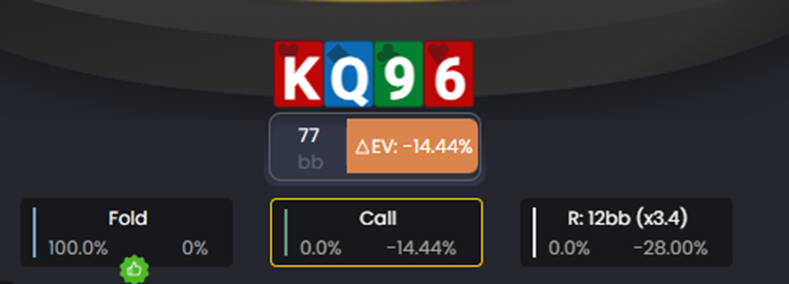
As you move through a hand, you can see where EV was lost and how significant that loss was compared to the pot. Understanding this connection between action and cost accelerates learning.
For example, if you see a 25% EV Loss on a turn fold, you know immediately that you gave up way too easily. That's a fundamental mistake worth studying, not just a marginal error.
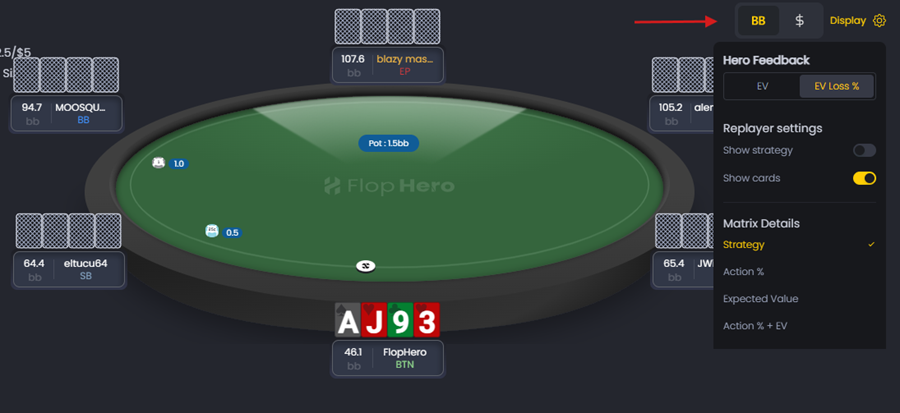
You can change your view from EV to EV Loss % by clicking on Display.
Using EV Loss % to improve
Here's how to use EV Loss % in your study routine:
Prioritize study
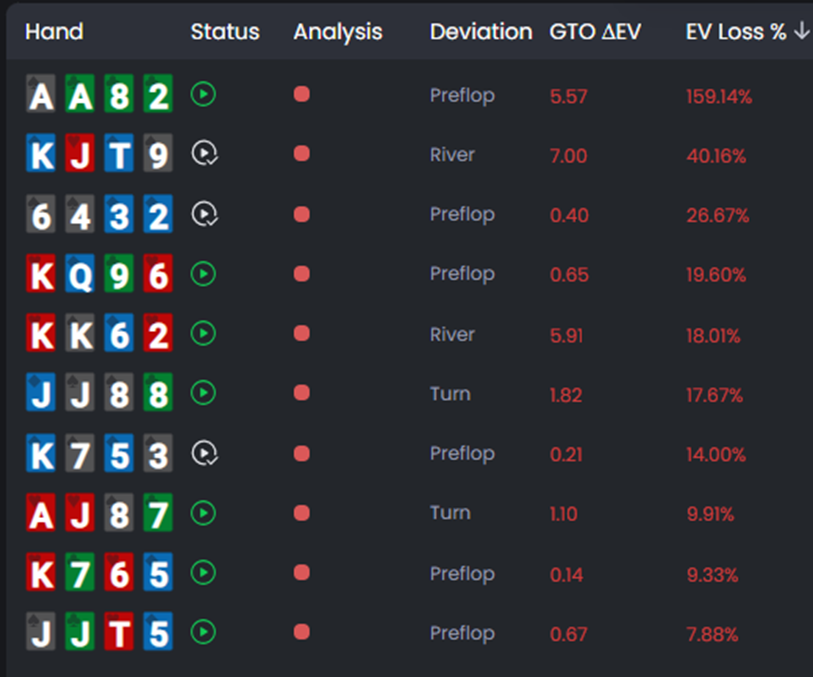
Sort the Handlist by EV Loss % to find your biggest proportional errors first. These are the hands where you lost the most value relative to the pot size. Start there.
Identify fundamentals
Large percentages (>10%) often indicate missing knowledge of core strategy. If you're consistently making high EV Loss % mistakes in the same spot, you don't understand that situation. Use Reports to filter for those spots and study them systematically.
Track progress
As you improve, your average EV Loss % should consistently decline. Check your Session Dashboard regularly to monitor this trend. If your average EV Loss % is staying flat or increasing, you're not fixing your leaks - you're just playing more hands.
EV Loss % vs Delta EV
EV Loss % and Delta EV (ΔEV) are related but measure different things:
- EV Loss % - Shows how severe a mistake was relative to the pot (percentage)
- Delta EV (ΔEV) - Shows the absolute dollar amount you lost (raw EV)
Use EV Loss % to identify the most severe mistakes. Use ΔEV to see which mistakes cost you the most money overall. Both are important, but they tell you different things.
Focusing on your highest EV Loss % spots helps you repair the biggest leaks in your understanding and achieve faster, measurable progress. Fix the blunders first, then work your way down to the minor errors.
Was this article helpful?
Still need help?
Join our community
Get instant support from experts and fellow players
Join Discord Community